
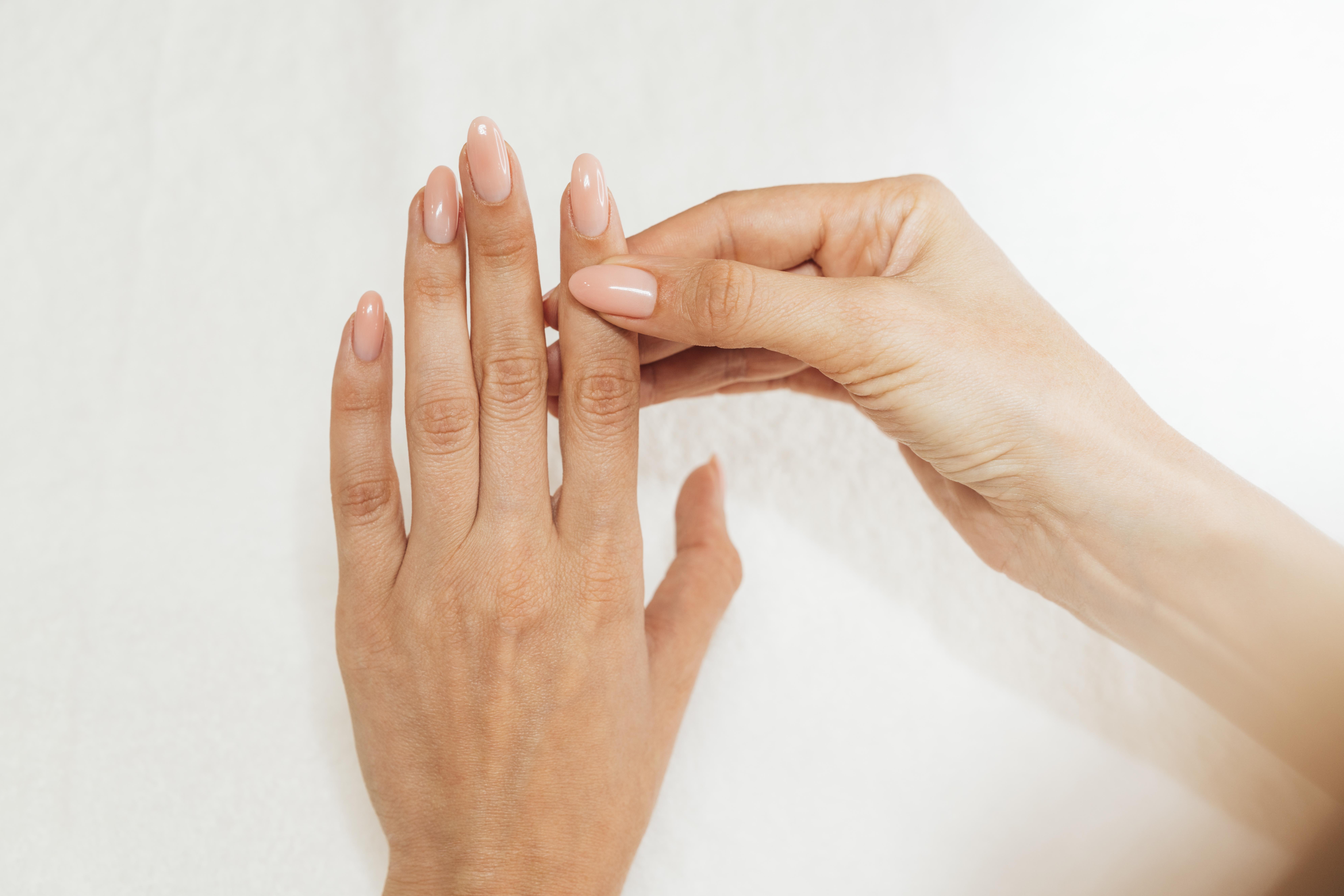

You’ve probably heard it a hundred times: “Give your nails a break between gels.” But that advice is like telling someone to stop washing their hair because they got a bad haircut.
The real problem was never the service.
The Truth About Nail-Health Breaks and Manicures Done Right in Stow, Ohio
If you’ve been searching for a better experience with a manicure in Stow, Ohio, you’ve probably run into the above advice. Maybe a friend passed it along, or the tech at your last salon mentioned it after your removal appointment. Or maybe, you’ve been going polish-free for weeks, waiting for your nails to “recover.”
We hear this constantly at The Golden Room. We understand why people follow it: It sounds reasonable, right? But it’s built on a foundation that dermatologists have been pushing back on for years.
In this post, we break down the science so you can stop worrying about something that isn’t an actual problem. We also give you a real framework for knowing when a break makes sense and when finding a better salon is the answer.
Debunking The “Your Nails Need to Breathe” Myth
Your nails don’t breathe. That’s not a hot take. That’s just anatomy.
The nail plate is made up of compacted layers of dead keratin. It has no pores, it doesn’t exchange gas, and it doesn’t require airflow to stay healthy. The oxygen your nail bed receives comes from your bloodstream, not from the surface of your nail. Covering your nails with gel doesn’t cut off their oxygen supply any more than wearing a glove cuts off circulation to your fingers.
The “breathing” myth persists because it’s easier to give a blanket rule than to explain technique. It also gives salons a convenient way to deflect when nails look damaged after a set: blame the gel, prescribe a break, and move on.
What Research on Nail Plate Permeability Actually Shows
The nail plate is roughly 0.5mm thick and is largely impermeable to oxygen at the surface. What is real is moisture. Water loss from the nail bed occurs laterally and beneath the nail plate, not through the nail plate itself. Gel can trap existing moisture under the nail, which is a different concern than blocking airflow, and understanding that distinction matters.
A well-formulated gel system can reduce the mechanical trauma your nails experience daily when applied carefully. Typing, cleaning, or opening packages all put stress on the nail plate. A properly cured gel acts as a protective layer, not a suffocating one.
What Actually Damages Nails During Gel Applications
The damage you’ve seen from gel almost always traces back to one of four things:
- Aggressive prep
- Improper removal
- Poor product application
- Mismatched product systems
Over-filing the nail plate during prep is one of the most common culprits. A nail that’s been buffed too aggressively looks visibly thinner and feels more flexible than it should. That’s not the gel causing the problem; it’s the prep work before it.
Using low-quality products or mixing brands that weren’t formulated to work together also causes adhesion issues, setting the stage for lifting and peeling.
Removal Is Almost Always the Real Culprit
Think of peeling a sticker off a painted wall. Pull slowly and carefully, and you get it off clean. Yank it, and you take the paint with it. Improper gel removal works in a similar way on your nail plate. When the gel is peeled or picked off rather than properly soaked, the top layers of the nail plate are removed along with it. That white, chalky, thin surface you’re left with after a DIY removal? That’s structural damage to the keratin layers of your nail. A “break” doesn’t fix it quickly because those layers don’t regenerate overnight; they grow out slowly over weeks, just as they would with continuous professional care.
Acetone isn’t the villain here. Scraping and pulling during and after soaking causes the trauma. Used correctly and at the right time, removal with acetone should feel like nothing at all. If it’s pulling, something is wrong with the timing or the technique.
Manicures Done Right Don’t Require Long Recovery Breaks
Fingernails grow approximately 3mm per month. That means the entire nail plate replaces itself roughly every 5 to 6 months. With good technique and professional removal at every appointment, healthy new growth continuously replaces treated nail.
Clients getting gel manicures in Stow, Ohio, shouldn’t leave the salon with compromised nails. Proper processes use gentle prep with only light buffing on the natural nail, correct product layering, full cure times, and unhurried removal appointments that prioritize your nail integrity over speed.
Continuous professional wear is often less traumatic than repeated DIY removal cycles. Each time someone removes gel at home without proper technique, they risk causing more damage than the application itself.
How to Spot a Nail Salon in Stow, Ohio, That Prioritizes Your Nail Health
Knowing what to look for saves your nails years of unnecessary recovery. Here’s how to read the room at any salon before you commit.
Green flags:
- Thorough consultation before your first appointment
- Light buffing only on the natural nail, no aggressive filing
- No e-file is used directly on the natural nail plate unless the tech has advanced training
- Unhurried removal with adequate soak time before any tool touches the nail
Red flags:
- Gel peeled or pried off rather than soaked
- Rushed bookings with no buffer time built in for removal
- Generic “your nails need a break” advice with no assessment of your actual nail condition
A skilled nail tech welcomes your questions. If asking about the removal process gets a defensive response, that tells you something important. [INTERNAL: link to The Golden Room’s nail services page covering gel manicure and structured gel options]
When a Break Makes Sense Versus When You’re Solving the Wrong Problem
Let’s be real: A break isn’t always wrong. There are legitimate reasons to step back from gel, and your salon should tell you honestly if you’re one of them. But most people taking “nail breaks” are solving the wrong problem.
Ask yourself: Is my nail actually damaged, or did someone tell me it was without showing me why? Did the damage appear after removal, or after application? Have you reviewed my nail health, or is this generic advice?
Signs Your Nails Genuinely Need a Rest
Some situations call for a real break, and we’ll be the first to say so:
- Visible nail plate thinning or white spots (leukonychia) that persist well after removal
- Symptoms of allergic contact dermatitis: persistent redness, itching, or lifting at the nail fold
- A diagnosed condition, like psoriasis or onychomycosis, where a dermatologist has specifically recommended avoiding gel
- Systemic nail changes from illness or nutritional deficiency that need to be resolved from the inside out
In these cases, stepping back is the right call, and we’ll tell you that before we put any product on your nails.
Signs You’ve Been Told to Take a Break for the Wrong Reasons
You deserve honest answers, not blanket rules. Watch for these patterns:
- “Your nails need to breathe,” with no specific assessment of your nail’s condition
- A tech blaming the gel for damage that clearly happened during removal
- Being told to take a break after every single set as standard practice, regardless of how your nails look
- Advice that conveniently shifts accountability away from the person who did the work
If any of that sounds familiar, the break wasn’t the solution. A better salon was!
What a Manicure in Stow, Ohio, Should Actually Feel Like
Whether you’re overdue for a fresh gel set or you’ve been on a self-imposed break, we’d love to show you what a properly done manicure in Stow, Ohio, actually feels like. Our process is built around your nail health first, and we don’t rush it.
The Golden Room is a family-owned salon serving Stow, Hudson, and the surrounding Northeast Ohio communities. If you have concerns about your nail health before your appointment, reach out beforehand. Our team welcomes that conversation, not because we have to, but because it leads to better results for you. And while you’re here, explore our full menu of offerings, including pedicures, lashes, and spa services.
If you want to know exactly what we’ll do differently, ask us. That’s the kind of question we love to answer.